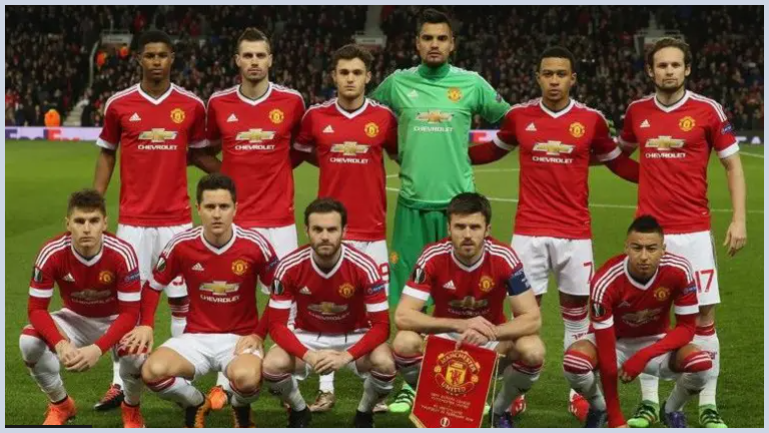
Ander Herrera’s next competitive match will not be under the lights of La Bombonera in the Copa Libertadores, but in front of around 6,500 spectators in Spain’s third division against Gimnàstic de Tarragona. Yet the 37-year-old insists his free-transfer return to Real Zaragoza is as meaningful as any move in a decorated career that has taken him from Manchester United and Paris Saint-Germain to Boca Juniors.
“Closing the circle”: a dream return to Zaragoza
For Herrera, this is about more than football, it is about coming home. “This is probably the last dream that I wanted to make come true,” he told BBC Sport. “To come back home, to the place where I grew up, that gave me the opportunity to be professional, not only in football, also as a human being.” “I still have the passion, I still have the desire. I still have that love for football and to do it at home is the best way to end up in my career. In Spain, we say closing the circle.”
Herrera first left Zaragoza in 2011, when the club was in financial difficulty, but always hoped to return one day. Fifteen years on, after two spells at Athletic Club, stints at Old Trafford and the Parc des Princes, and a final season in Argentina, he has come back at the club’s lowest point: outside the professional tiers for the first time in 77 years.
Donating his salary to the Zaragoza Foundation
In a gesture that underscores the emotional weight of the move, Herrera has opted to donate his salary to the Real Zaragoza Foundation rather than take a wage. “I don’t need a contract. I have a very successful career. I have taken care of my money,” he said. “I can give this present to myself. To put that shirt on… for free because I wanted to help my club, my team, my city.” “I am not thinking about money or contracts. I feel a privilege to be able to do that.”
From European nights to the third tier
Zaragoza, who famously beat Arsenal in the 1995 Cup Winners’ Cup final, were relegated from La Liga in 2012–13 and have since endured a long decline, culminating in last season’s drop to Primera RFEF. Herrera watched much of that fall from afar but is determined to help reverse it. “Real Zaragoza belong to Europe, they belong to compete for trophies, to be fighting with the biggest clubs in Spain and in Europe,” he said. “I want to put my quality, my experience and my passion to try to help my team to come back where I think we belong.”
He is also keen to shift the narrative away from past failures. “We have been talking too much about what we have done wrong… Let’s stop crying about what happened in the past. Let’s build on the future. Let’s come every day to training with a smile.”
Roots, role models and a Basque coaching blueprint
Herrera’s connection to Zaragoza runs deep. His father, Pedro Herrera, was a player and later general manager at the club, and many of Ander’s earliest football memories were forged there, including watching the 1995 European triumph from home. “You can now see the difference between Arsenal and Real Zaragoza, but we used to fight against those giants,” he reflected.
Looking beyond his playing days, Herrera says he is drawn to working with young players and helping them navigate the pressures of modern football, particularly the distortions created by social media. “Young players want to run too fast and I think if you make two steps instead of one you can make a mistake,” he said. “Every player has his moment. Just because he’s doing it faster than you [it doesn’t mean] that he’s going to be a better player than you. Social media is making us live too fast in every aspect of society.”
He points to the success of Basque coaches in the Premier League, Xabi Alonso at Chelsea, Mikel Arteta at Arsenal, Unai Emery at Aston Villa and Andoni Iraola at Liverpool, as evidence of a regional footballing DNA built on respect, work ethic and incremental improvement. “I don’t know how to explain it. I think it goes in the DNA… They have so much love for their own things and it’s something very special to experience.”
One mission: bring Zaragoza back
While Herrera remains open to a future in coaching, his immediate focus is clear: help Zaragoza climb out of the third division and restore the club’s stature. “I am so proud and I feel so privileged to do every single step that I have made in my career. Hopefully I can end up successful at home.”