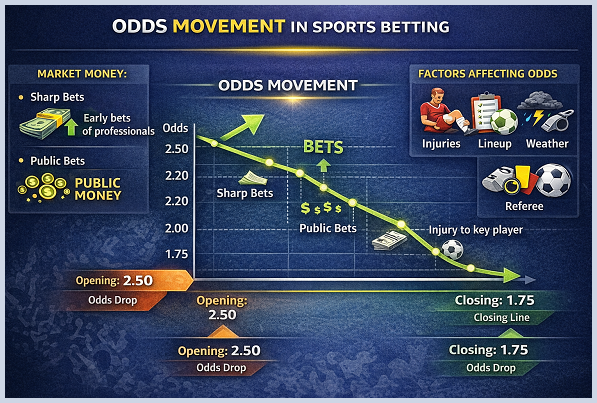
If you've ever opened a betting app in the morning, seen a team at +150, then checked again a few hours later only to find +120, you’ve witnessed something many casual bettors ignore: line movement explained: what odds changes really tell you in real time.
I remember one weekend when I was preparing bets for a major football match. Early that morning, I saw a strong underdog priced attractively. I got distracted, went out for lunch, and returned a few hours later ready to place my wager. Suddenly the odds had shifted dramatically. My first reaction was confusion. Was there breaking news? Did a key player get injured? Had weather conditions changed?
As I later discovered, odds don’t just move randomly. There’s usually a story behind every shift. Understanding that story changed the way I approach betting completely.
Odds Are More Than Numbers
Many beginners see odds as static figures. In reality, they behave more like financial markets. Betting lines constantly react to information, money flow, and market activity.
Bookmakers initially release opening odds based on research, team statistics, injuries, historical performance, and predictive models. But those first numbers aren't final.
The moment betting begins; the market starts talking.
Large amounts of money on one side can push bookmakers into action. Fresh injury updates can alter expectations. Even weather reports can affect betting prices.
That movement is what experienced bettors watch carefully.
Line movement, betting odds changes, and market trends often reveal hidden information before headlines catch up.
How Bookmakers Actually Influence Odds
Many people assume bookmakers simply predict outcomes. That's only part of the job.
From what I've observed, bookmakers act more like risk managers than fortune tellers.
Their goal isn't always to perfectly predict who wins. They also want balanced action on both sides to reduce exposure.
Imagine a football match where Team A opens as a slight favorite. Suddenly thousands of bettors rush to place money on Team A.
If bookmakers keep the odds unchanged, they risk paying massive winnings if Team A wins.
To protect themselves, they adjust the line. Maybe Team A moves from -110 to -150.
Why? Because the bookmaker wants betting activity to shift toward the other side and create balance.
This is why bookmaker strategy, sportsbook adjustments, and odds movement analysis matter so much. They're constantly reacting to market pressure.
The Hidden Power of Sharp Bettors
This is where things become fascinating. Not all betting money is viewed equally.
A lesson I learned after years of following betting markets is that sportsbooks pay close attention to who places the bets, not just how much is wagered.
Enter the sharp bettors. Sharp bettors are experienced, highly skilled gamblers with strong records of identifying value before everyone else notices it.
These aren't casual bettors making emotional decisions because their favorite team is playing.
They're analytical. They study data, injuries, scheduling spots, advanced metrics, and betting models.
And sportsbooks respect them. Sometimes odds move because sportsbooks trust the people placing those bets.
Public Bettors Also Move Markets
Sharp bettors aren't the only influence. The general betting public matters too.
Popular teams attract emotional money. Big clubs with huge fan bases often receive waves of support regardless of actual value.
Think about famous football teams or major title contenders. Casual bettors love backing recognizable names. Bookmakers know this.
Sometimes odds move simply because thousands of fans are betting with emotion instead of analysis. This creates an interesting contrast between public betting trends and sharp action.
One follows feelings. The other follows numbers.
Learning the difference can be incredibly valuable.
Not Every Line Move Means Panic
One mistake I made early on was assuming every odds movement carried hidden secrets.
That's dangerous. Sometimes changes happen because of simple factors:
- Injury reports
- Weather forecasts
- Team announcements
- Large wagers
- Public betting volume
- Market corrections
Small movements can be normal market activity. Massive movements usually deserve closer attention. Context matters. Blindly chasing moving lines without understanding the reason often leads bettors into trouble.
What I Learned from Watching Line Movement
After years of observing betting markets, I stopped seeing odds as simple prices. Now I view them as conversations.
Every movement tells a story. Sometimes bookmakers are reacting to money. Sometimes sharp bettors have discovered value. Other times public opinion pushes markets in emotional directions.
The trick isn't just noticing movement. The real skill is understanding why it happened.
That’s why line movement explained: what odds changes really tell you is more than a betting topic, it’s one of the biggest lessons bettors can learn.
Because behind every changing number lies information, psychology, and strategy. And once you start reading those signals, betting suddenly becomes much more interesting.