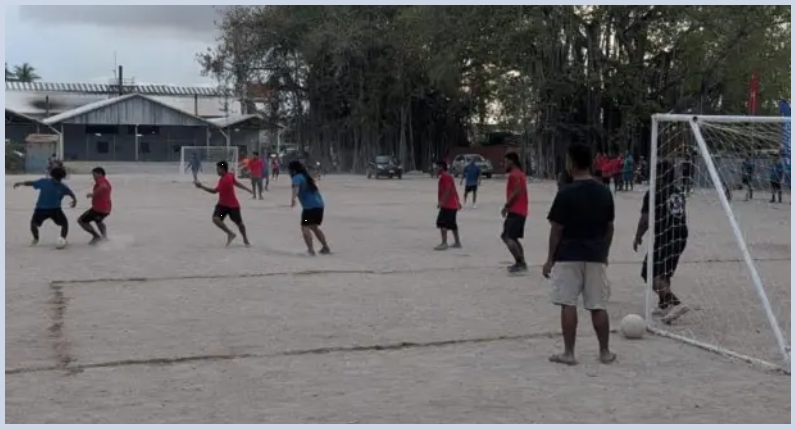
For six weeks, football captured the attention of almost every corner of the world, including Nauru, one of the smallest nations on Earth.
But after Spain lifted the 2026 FIFA World Cup trophy, the excitement quickly disappeared on the tiny Pacific Island. Unlike many countries where football dominates daily life, the sport remains almost invisible in Nauru.
The island has never competed in an official senior international match and currently has only one football pitch, a hard and dusty surface created from crushed dirt and phosphate remains.
However, that could soon change.
A group of volunteers led by British football developer Charlie Pomroy is working to create a long-term football culture in Nauru and help the country build its first national team.
Nauru’s Long Road Towards Football Recognition
Nauru has long been known as one of the few countries without a senior international football team.
Previous attempts to introduce the sport have struggled to gain momentum. The closest the nation came to playing recognised matches were unofficial games against a Solomon Islands expatriate team in 1994 and a refugee side in 2014.
Unlike neighbouring Pacific countries, where football has become deeply rooted, Nauru's sporting culture has traditionally revolved around Australian rules football, athletics and weightlifting.
Around 30% of locals participate in Aussie rules, while the country has also produced Olympic competitors in athletics and weightlifting.
For many years, football was seen as unusual. Children often followed global stars such as Lionel Messi and Cristiano Ronaldo, but attempts to play the sport locally were sometimes mocked unless it involved other popular sports.
A Nation Facing Unique Challenges
Located in the Pacific Ocean, around 2,500 miles northeast of Australia, Nauru has a complicated history.
The island gained enormous wealth from phosphate mining, a resource created from centuries of bird droppings. However, decades of mining severely damaged the landscape, leaving large areas of the country difficult to inhabit or farm.
After gaining independence from Australia in 1968, Nauru struggled economically once its phosphate reserves declined.
Today, around 12,000 people live on an island covering only 21 square kilometres, with most residents concentrated around the coastal areas. Climate change and rising sea levels have added further challenges, threatening the country's future.
The environmental damage has also affected health. Nauru imports more than 90% of its food, much of which is processed, contributing to one of the world's highest obesity rates. Around 69% of the population is classified as obese, while approximately 40% have type 2 diabetes.
Football as a Tool for Change
For Pomroy, football is not only about creating a team. It is about improving health, building confidence and changing how the world views Nauru.
The former academy player, who worked at Stevenage before the club reached the Football League, believes sport can transform communities.
"They want people to see the country in a more positive light rather than the punchline of a joke," Pomroy explained. He added that football, rugby, basketball, cricket, weightlifting and other sports can all contribute to creating a healthier future for Nauru.
Pomroy has experience using football as a development tool. He previously created a charity project in Cambodia that eventually became a professional academy, producing dozens of players who went on to play professionally.
He has also launched football programmes in India aimed at supporting underprivileged communities.
The Plan to Introduce Football Across Nauru
One of the first challenges facing Nauru Soccer is providing equipment. The project has launched an ambitious campaign to give every child aged between four and 14 a football. Around 2,000 children are expected to benefit.
Working with schools and churches across the island, volunteers plan to distribute the balls gradually, sending around 200 at a time by plane to manage the process effectively.
The goal is to create regular participation rather than temporary excitement. Previous projects focused on short-term events, including an attempted match involving former Premier League striker Dave Kitson and a group of Nauruan players after a two-week training camp.
The proposed game against Reading-based Sunday league team XL FC never happened because of financial difficulties. Pomroy believes long-term development is the only realistic solution. "Let's build the ecosystem, not just one-off games," he said.
Dreaming of Nauru’s First National Team
Pomroy's biggest ambition is for Nauru's first official international match to feature players who have grown through the new development system. He hopes to identify young players aged around 14 and work with them over several years until they are ready to represent the country at senior level.
"If we sat here in five years' time, I genuinely believe we will have a senior team filled with 18, 19 and 20-year-olds," he said.
The plan includes coaching programmes for both players and local coaches when Pomroy visits the island for a training camp in December.
Finding Space to Play
Infrastructure remains one of the biggest obstacles. Much of Nauru's land is either privately owned or unusable because of mining damage.
Volunteer Tyrone Deiye, who works as an urban planner on the island, hopes to use family-owned land to create additional football pitches. Indoor facilities are also being considered as a possible solution.
The current pitch remains a major limitation, but organisers believe creativity and commitment can overcome the challenges.
Building More Than a Football Team
Pomroy insists the project is not about forcing football onto the population. Instead, the aim is to introduce opportunities, encourage healthier lifestyles and create stronger communities through sport. He believes football teaches important values beyond winning and losing.
"The life lessons you learn through football aren't just on the pitch," Pomroy said.
"It's about friendships, humility, looking after your body and learning how to get back up after setbacks." For him, the ultimate success would be hearing years later that someone's life changed because of the programme.
A New Chapter for Nauru Football
Other Pacific nations already have strong football traditions, and some expatriates from those countries play regularly on Nauru.
Deiye hopes his country can eventually develop the same passion. "Those countries are really big into football. I want Nauru to be like that," he said.
The Marshall Islands recently played their first international match, ending their claim as the last country without a national football team. Nauru now hopes to follow the same path. Despite challenges such as funding, communication problems and limited infrastructure, the project continues to grow.
The Nauru Soccer Federation now has an official website and sells national team shirts to raise money for development. Pomroy admits progress will take patience, especially because many Nauruans have experienced broken promises in the past.
However, early reactions have been positive. For a nation that once had almost no football identity, the dream of building a national team is no longer just an idea. It is becoming a realistic possibility.