Spain are once again on the brink of football history.
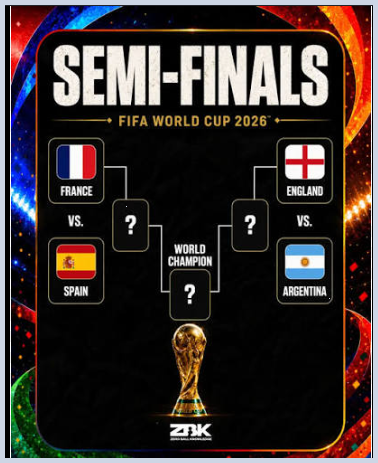
Sixteen years after lifting their first-ever FIFA World Cup in South Africa, Spain have returned to the final, where they will face Argentina with the hope of becoming world champions for a second time.
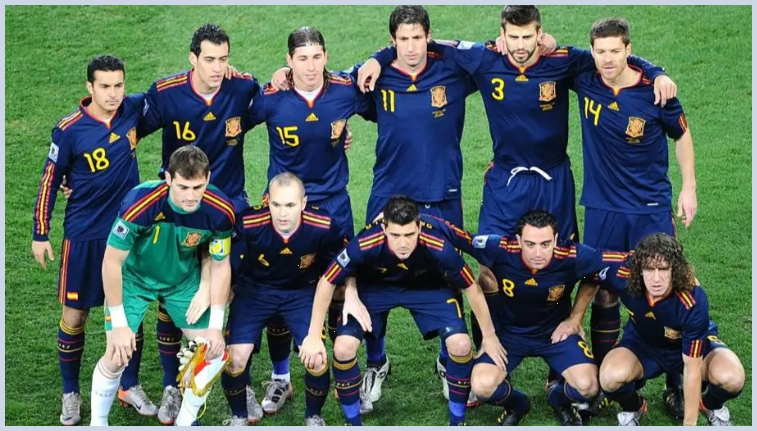
The 2010 squad, led by Vicente del Bosque, is widely regarded as one of the greatest international teams ever assembled. Built around the legendary Barcelona midfield of Xavi Hernandez, Andres Iniesta, and Sergio Busquets, that side dominated world football with its famous possession-based style.
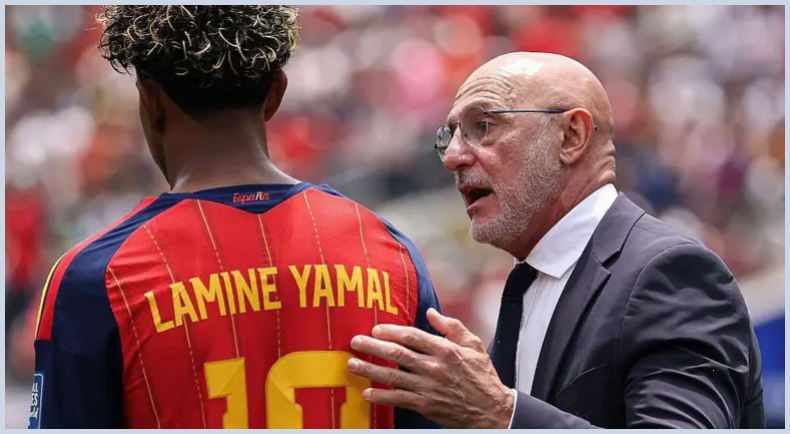
Fast forward to 2026, and Luis de la Fuente has built a different kind of Spain team. It may not possess as many household names, but it has combined tactical discipline, defensive solidity, youthful energy and relentless consistency to reach another World Cup final.
So, how does Spain 2026 compare with the iconic Spain 2010 side? Here's a position-by-position breakdown.
A Similar Road to the World Cup Final
Interestingly, both teams entered the World Cup riding the momentum of European Championship success.
Spain won Euro 2008 before conquering the world in 2010. Likewise, De la Fuente's squad arrived at the 2026 tournament after lifting Euro 2024. Continuity has been another common factor.
Only three members of Spain's starting XI in the 2010 World Cup final were absent from the victorious Euro 2008 squad. Similarly, only two players who started the 2026 semi-final against France were not part of Spain's Euro 2024 triumph.
Despite their youthful appearance, the current squad actually has a slightly higher average age than the 2010 group.
- Spain 2010 average age: 26.7 years
- Spain 2026 average age: 27.8 years
However, Del Bosque's squad possessed far greater international experience, averaging 56 caps per player, compared to 33 for the current generation. Another remarkable statistic underlines how impressive this team has become.
Spain entered the final on a 37-match unbeaten run, matching Italy's all-time international record, although that sequence excludes a penalty shootout defeat to Portugal in the UEFA Nations League final.
Even more impressively, Spain have recorded six clean sheets during the 2026 World Cup, the most ever by a team in a single edition of the tournament.
Goalkeeper
Iker Casillas (2010) vs Unai Simón (2026)
This comparison pits one Spanish legend against arguably the country's finest modern goalkeeper. Remarkably, Iker Casillas was only two weeks older than Unai Simón when he appeared in the 2010 World Cup final.
Casillas remains one of Spain's greatest-ever players and is second only to Sergio Ramos in international appearances. His calmness, leadership and remarkable reflexes helped Spain concede just two goals throughout the 2010 tournament.
Simón, meanwhile, has developed into one of Europe's most dependable goalkeepers under Luis de la Fuente. His current run of six consecutive World Cup matches without conceding in normal time, stretching back to Qatar 2022, is a record for a Spanish goalkeeper.
Verdict: Casillas still edges this battle because of his legendary status and decisive contributions in Spain's greatest triumph.
Full-Backs
Sergio Ramos & Joan Capdevila vs Pedro Porro & Marc Cucurella
In 2010, Spain's full-backs blended experience with quality.
Sergio Ramos, already one of Europe's elite defenders, would go on to win 28 major trophies during an extraordinary career. On the opposite flank, Joan Capdevila quietly delivered consistent performances that often went unnoticed but proved crucial.
The 2026 pairing has exceeded expectations. Both Pedro Porro and Marc Cucurella entered the tournament after mixed club seasons with Tottenham and Chelsea respectively.
However, they have become key components of Spain's success. Porro has offered constant attacking support, while Cucurella has combined defensive resilience with tireless energy.
Although neither possesses Ramos' legendary résumé, both have performed superbly throughout the tournament.
Verdict: Spain 2010 still have the edge thanks to Ramos' world-class influence.
Central Defence
Carles Puyol & Gerard Piqué vs Pau Cubarsí & Aymeric Laporte
Spain's famous partnership of Carles Puyol and Gerard Piqué became one of football's greatest defensive duos. Puyol's leadership perfectly complemented Piqué's composure on the ball.
Together, they conceded only two goals throughout the tournament. The modern pairing has quietly matched those standards.
Veteran Aymeric Laporte has provided experience, while teenage sensation Pau Cubarsí has emerged as one of world football's brightest defensive talents.
The pair have conceded only one goal on Spain's journey to the final, including an outstanding display that neutralised Kylian Mbappe, Ousmane Dembele, and Michael Olise against France.
Verdict: The current duo deserves enormous credit, but Puyol and Piqué remain the benchmark.
Defensive Midfield
Sergio Busquets & Xabi Alonso vs Rodri & Fabian Ruiz
This is arguably the toughest comparison.
Busquets and Xabi Alonso dictated games with remarkable intelligence, shielding the defence while controlling possession.
The modern pairing has been equally dominant.
Rodri, the 2024 Ballon d'Or winner, has arguably been Spain's most influential player, completing more passes than anyone else at the tournament while ranking among the leaders for tackles won.
Alongside him, Fabian Ruiz has brought creativity, composure and the experience of multiple Champions League triumphs.
Verdict: Rodri and Ruiz have been exceptional, but Busquets and Alonso remain slightly superior because of their legacy.
Creative Midfield
Xavi Hernandez & Andres Iniesta vs Dani Olmo & Alex Baena
This is where the greatest gap appears. There is no questioning the quality of Dani Olmo and Alex Baena. Both have played vital roles in Spain's run to the final.
However, comparing them to Xavi and Iniesta is one of football's hardest tasks. The legendary duo defined an era. Xavi orchestrated every attack, while Iniesta delivered perhaps the most famous goal in Spanish football history with his extra-time winner against the Netherlands. Their understanding remains unmatched.
Verdict: Spain 2010 comfortably win this category.
Attack
David Villa & Pedro vs Lamine Yamal & Mikel Oyarzabal
The attack represents one of the biggest contrasts between both teams. In 2010, David Villa carried Spain's goalscoring burden, finishing the tournament with five goals to share the Golden Boot race alongside Diego Forlán, Wesley Sneijder, and Thomas Müller.
Pedro added pace and intelligent movement despite having limited international experience. Spain 2026 rely on a different profile.
Lamine Yamal has become the team's creative heartbeat. Although he has scored only once at this World Cup, his dribbling, vision and unpredictability constantly trouble opponents.
Alongside him, Mikel Oyarzabal has quietly delivered crucial goals, scoring five times during the tournament while maintaining an impressive international scoring record. Unlike Villa, however, neither player serves as an out-and-out goalscoring talisman.
Verdict: Villa's brilliance gives Spain 2010 another advantage.
Experience vs Evolution
While the 2010 squad possessed more legendary names, the current generation has forged its own identity. Rather than relying purely on possession football, Spain 2026 combine intelligent pressing, tactical flexibility and defensive organisation. Their six clean sheets demonstrate just how difficult they have become to break down.
Meanwhile, De la Fuente's willingness to trust younger players like Lamine Yamal and Pau Cubarsí has injected fresh energy into the national team.
Whether this version can eclipse the achievements of Spain's golden generation ultimately depends on one result.
Victory over Argentina would forever place this squad among the country's greatest teams. Until then, the heroes of 2010 still hold the crown.